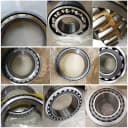
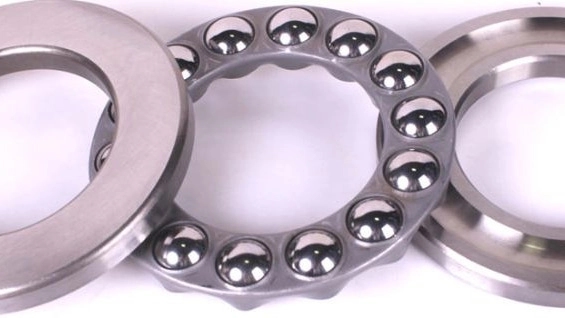
Features of industrial bearings:
1. Reducing friction: Bearings are designed to reduce the friction between two moving surfaces, thus increasing the efficiency and life of devices. 2. Load bearing: Bearings can bear heavy loads and effectively resist pressure and mechanical stresses.
3. Diversity in design: Bearings are produced in different types, including spherical, cylindrical, and conical bearings, each of which is designed for specific applications.
Applications of industrial bearings
1. Industrial machinery: used in machinery such as conveyors, pumps, and motors to facilitate movement and reduce friction. 2. Automotive: Used in cars for wheels, engine, and power transmission systems.
3. Electronic equipment: In some electronic and computer equipment, they are also used to reduce friction and improve performance.
The benefits of using industrial bearings
- Increase Efficiency: by reducing friction, bearings can improve the efficiency of devices and reduce energy consumption.
- Longer life: the use of bearings can increase the useful life of equipment and reduce the need for repairs and replacement of parts. - Smooth and smooth movement: Bearings help the smooth and smooth movement of moving parts, which is very important in many industries.
Bearing is a mechanical part designed to reduce friction and facilitate movement between two moving surfaces. Bearings come in many types and are used in many industries and applications. In the following, I will mention some features, types and applications of bearings
Features of bearings
1. Reducing friction: Bearings are designed to reduce the friction between two moving surfaces, thus increasing the efficiency and life of devices. 2. Load bearing: Bearings can bear heavy loads and effectively resist pressure and mechanical stresses.
3. Variety in design: Bearings are produced in different types, each designed for specific applications.
Types of bearings
1. Spherical bearings: these types of bearings are designed to bear radial and axial loads and have the ability to rotate at different angles.
2. Cylindrical bearings: These bearings are suitable for bearing heavy loads and in situations where there is limited space.
3. Tapered roller bearings: These types of bearings are designed to bear axial and radial loads at the same time and are usually used in power transmission systems.
Bearing applications
1. Industrial machinery: used in machinery such as conveyors, pumps, and motors to facilitate movement and reduce friction. 2. Automotive: Used in cars for wheels, engine, and power transmission systems.
3. Electronic equipment: in some electronic and computer equipment they are also used to reduce friction and improve performance.
Advantages of using bearings
- Increased efficiency: By reducing friction, bearings can improve the efficiency of devices and reduce energy consumption. To repair and replace parts reduce.
- Smooth and smooth movement: Bearings help the smooth and smooth movement of moving parts, which is very important in many industries.